
Contact

When the Right of Access Becomes an Abuse: A Practical Guide for Companies

5

min read

Executive Summary

  • The right of access (Art. 15 GDPR) is frequently misused — companies have the right to respond proportionally
  • Complete guide: how to identify abusive or excessive requests and how to handle them lawfully
  • Identity verification, limitation and partial refusal mechanisms compliant with GDPR
  • The right balance: protect your company without violating the legitimate rights of data subjects

Article 15 serves as a dual safeguard. For individuals, it provides the opportunity for transparency and control. For companies, it can become an instrument of pressure if not handled correctly. This exhaustive guide explains how to manage access requests, including abusive ones.

Introduction

Article 15 serves as a dual safeguard. For individuals, it provides the opportunity to find out what data a company processes about them and for what purpose. At first glance, it may seem counterintuitive, but for businesses, Article 15 of the GDPR is also a tool for facilitating business operations, promoting organizational transparency, and increasing the trust that individuals have in your company. 

However, in certain situations, access requests can become abusive or unlawful. Their impact entails unnecessary costs and unjustified legal risks. Recently, in the Brillen Rottler case in Austria, a data subject exercised their right of access to their personal data immediately after subscribing to the company’s newsletter, with the aim of obtaining compensation. The Court of Justice of the European Union (CJEU) clarified that such a request may be considered excessive if the data subject’s actual purpose is not to verify the lawfulness of the processing of personal data, but to obtain compensation. 

Companies are thus faced with the challenge of striking a balance between respecting the rights guaranteed by the GDPR and optimizing resources while maintaining their reputation. 

Right of access: substance, purpose, and management

Under the GDPR, any individual has the right to receive confirmation as to whether their data is being processed by your company, and, to the extent applicable, access to the data you process and other relevant information, such as: the purpose of the processing, the categories of data processed, the recipients of the data, or the data retention period and the relevant criteria by which you determined it. 

We reiterate that this right is essential for transparency and the trust of individuals who access your services or products, and companies that respond correctly and promptly strengthen their relationship with customers and avoid significant penalties (financial, organizational, and reputational).
Signs of an abusive request

A request for access may be considered abusive in the following situations:

  • Repetitive pattern – the data subject sends requests for access to multiple companies within a short period of time, without any genuine interest in accessing their personal data;
  • Suspicious timing – the request is sent immediately after the data is collected by the controller (your company);
  • Lack of genuine interest – the data subject’s request is not related to verifying the lawfulness of the processing, but rather to obtaining compensation, essentially material benefits;
  • The data subject’s history – if, upon consulting a public record, it appears that the data subject has previously submitted requests (of any kind, but to stay on the topic of this article, we will limit ourselves to access requests) followed by claims for compensation, this behavioral pattern may be taken into account for the subsequent handling of such a request.

The CJEU has emphasized that the data subject’s intent is essential; in the Brillen Rottler case, even a first request may be excessive if the purpose is abusive.

How to properly handle a suspicious access request

To balance your company’s interests with the obligations imposed by the GDPR, the practical recommendations are:

  • Conduct a preliminary analysis – verify whether the data subject’s request meets the basic conditions required by the GDPR and identify any signs of abusive behavior: frequency, purpose, and the individual’s history;
  • Document the request – Save and archive all communications and requests internally to justify any decisions to refuse, and record the analysis regarding the data subject’s purpose and intent;
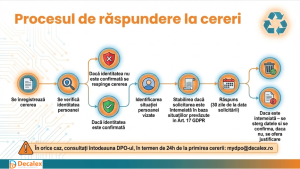
  • Communicate the response – if you deny the request, provide a reasoned response, explaining that this request may be considered excessive, citing the legal basis (Art. 12(5)(b) GDPR). If you conclude that the request is legitimate, respond promptly and fully to avoid potential complaints or sanctions from the authority;
  • Collaborate – involve the DPO or legal team before responding to the request and establish internal procedures to manage access requests, including criteria for identifying abusive requests. 

Compensation and Limits

The GDPR allows the data subject to claim compensation for material and non-material damages caused by the violation of their rights. However, it must be demonstrated that the damage is actual; if the data subject created the situation through abusive behavior, compensation may be denied. There is no automatic right to compensation for every request that is not processed correctly, especially if the data subject’s intent was abusive. Assessing each case individually is essential. 

Risks for companies

Failure to follow procedures for the improper handling of access requests can lead to GDPR sanctions (fines, warnings), legal implications, negative reputational impact, or excessive consumption of internal resources to remedy a mishandled access request. 

Best practices pentru prevenție și management

  • Develop and implement standardized procedures for DSARs (Data Subject Access Requests);
  • Implement concise forms for requests and responses;
  • Conduct regular training for teams handling personal data flows;
  • Monitor for any recurring patterns of abusive access requests;
  • Consult the DPO for suspicious cases.

Conclusion

Managing access requests under the GDPR is not only a legal obligation but also an opportunity to strengthen relationships with data subjects—who may very well be the customers accessing your goods or services—and to demonstrate transparency. However, companies must be aware of the potential for abuse: excessive, repetitive, or financially motivated requests should not be treated as legitimate.

The key lies in assessing the requester’s intent, fully documenting the process, and applying a pragmatic and GDPR-compliant approach.


Oana Sîrbu

Junior Privacy & Data Protection Consultant

Key Takeaways

  • Manifestly unfounded or excessive requests: can be refused or charged — document your decision
  • Verifying the identity of the requester: mandatory — do not respond without identity confirmation
  • Response deadline: 30 days (extendable to 90 days for complex requests) — respect the deadline
  • Third-party data in responses: redact personal data of other individuals from documents provided
  • Access request register: document all requests, responses and reasons for any refusals

Clarity for informed decisions

Understanding the relevant risks, responsibilities, and objectives provides the necessary perspective for setting priorities and strengthening organizational resilience

What implications might this have for existing activities and processes?

Understanding the implications for activities, processes, responsibilities, organizational objectives, and decisions is the foundation of an informed and sustainable approach.

Effective risk management requires clear responsibilities, appropriate processes, and monitoring mechanisms that are commensurate with the level of exposure.

Clear roles and coordination mechanisms contribute to the coherence and sustainability of decisions.

Regular assessments of processes, responsibilities, and control mechanisms provide the necessary foundation for strengthening organizational resilience and governance.

Featured article

Recommended articles

NIS2 in Romania: First DNSC Fine for Failure to Notify. What Organisations Need to Know About Compliance

Cybersecurity

ENISA findings and risks for NIS2 companies

Cybersecurity